What Does 20/100 Vision Mean? Causes, Correction & Glasses Options
Aug 06, 2026
Spotting “20/100 vision” on your eye exam results can feel confusing and worrying. You may wonder if your eyesight has gotten much worse. The good news is that 20/100 vision does not mean you have to live with blurry vision permanently. Most people can see sharply again with proper vision correction. In this guide, we break down exactly what 20/100 vision means, its common causes, available correction methods, and tips to pick suitable glasses.
What is 20/100 Vision Meaning?
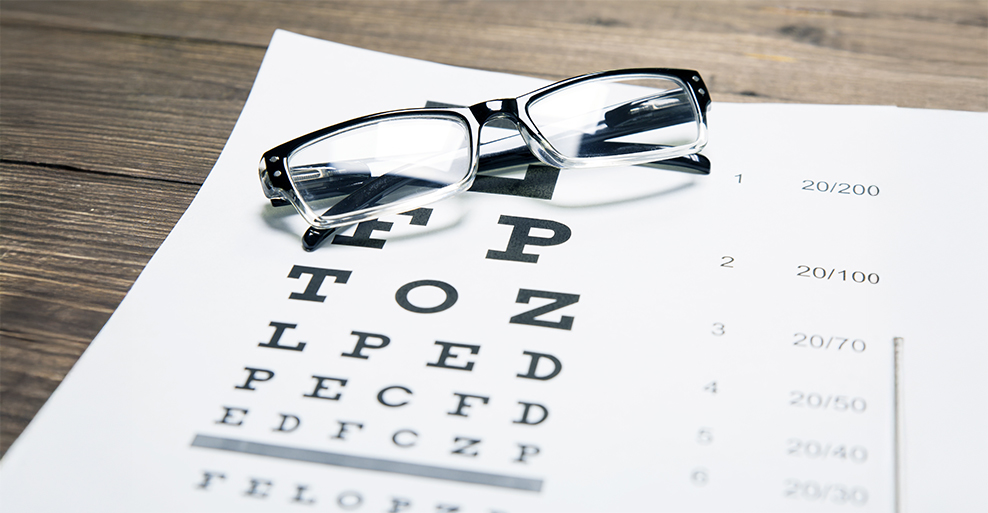
20/100 means that what a person with normal vision can see clearly from 100 feet away, you can only see clearly from 20 feet away. Simply put, if you’re sitting in the back row of a classroom and others can read the writing on the blackboard, but you have to walk to the front row to see it clearly, that’s 20/100.
It is important to note that this number only measures your visual acuity, which means how clearly you see at a distance. It does not tell you your exact eyeglass prescription, nor does it reflect your overall eye health. Your visual acuity might be 20/100, but your eyes could be perfectly healthy. Similarly, your visual acuity might be 20/20, yet you could still have an underlying eye condition. Which means a vision score alone isn't enough to judge your eyes.
Is 20/100 Vision Considered Legally Blind?
No, this is one of the biggest misunderstandings around eyesight scores.
Legal blindness depends on your best-corrected vision. By official standards, you are considered legally blind only if:
After wearing optimal glasses or contacts, your stronger eye measures 20/200 vision or poorer,
OR you have severe peripheral vision loss.
A 20/100 result typically refers to your uncorrected vision without eyewear. It does not reach the threshold for legal blindness. For most people, the right pair of glasses will restore crisp vision for everyday activities.
How Does 20/100 Vision Affect Your Daily Life?
Here are some real-life examples:
When you’re driving, you can’t make out the street name until your car is directly beneath the street sign.
During a meeting, you have to move to the front row to see the slides clearly.
You wave to someone across the street, only to realize afterward that it was a stranger because you couldn’t make out their face.
These everyday situations can be frustrating when your distance vision is blurry. The good news is that none of these problems are permanent. Once you get the right glasses, these issues will largely disappear. So, if these situations sound familiar, don’t worry—it just means your eyes need a little help, and glasses are exactly what can provide that help.
What Causes 20/100 Vision?
Refractive Errors Are the Most Common Cause
If objects in the distance appear blurry but those up close are clear, you have nearsightedness. If both distant and near objects are blurry, you may have astigmatism. If you have trouble seeing both near and far, but especially feel eye strain, you’re more likely to have farsightedness.
All three of these are types of refractive errors, which essentially stem from the same problem: light does not focus accurately on the retina. Distinguishing between them is actually quite simple:
Myopia (Nearsightedness): Light lands in front of the retina. Distant objects look blurry, but close-up items stay clear.
Hyperopia (Farsightedness): Light lands behind the retina. Near and far objects may both be hard to focus on, and your eyes fatigue quickly.
Astigmatism: Light scatters unevenly on the retina. Blurriness affects all distances. You may notice doubled outlines around objects.
These three conditions account for why most people have 20/100 vision. Fortunately, all three conditions can usually be managed with the right prescription lenses.
Age-Related Vision Changes Can Affect Clarity
If you’re over 40 and find that you’re having more and more trouble seeing things up close, it’s likely due to presbyopia. Presbyopia isn’t a disease; it’s caused by the lens gradually hardening and losing its elasticity, which is equivalent to the eye’s “autofocus” function deteriorating.
However, presbyopia does not replace your existing nearsightedness or astigmatism. Many people actually have both nearsightedness and presbyopia, or astigmatism and presbyopia, which explains why a single pair of glasses is often insufficient by middle age.
Eye Conditions May Also Influence Visual Acuity
The refractive errors and presbyopia discussed above are essentially problems with “light focusing,” which can be corrected by wearing glasses. However, if your vision remains blurry even after wearing the correct glasses, or if you experience any of the following symptoms:
Unusual light sensitivity or persistent glare
Faded, dark, or yellowed color perception
New dark spots or a sharp rise in eye floaters
Rapid, unexpected vision loss
The problem may lie in the structure of the eye itself—such as cataracts, macular degeneration, or retinal issues. These conditions are not refractive errors and cannot be corrected with glasses; they require treatment by an ophthalmologist.
How Can 20/100 Vision Be Corrected?
Prescription Glasses Can Restore Clear Vision
Prescription eyeglasses are the most common and convenient solution for correcting 20/100 vision caused by refractive errors.
The lenses work by adjusting how light enters your eye so it focuses directly on the retina, not in front of it. That focusing error is what causes blurry distance vision in the first place. Depending on your specific prescription, your doctor may recommend single vision lenses for distance only, or bifocals and progressives if you also have trouble seeing up close.
The beauty of glasses? They are low-maintenance. They do not require daily cleaning routines like contacts, and they protect your eyes from dust and wind. Plus, they are an easy way to update your look if you are into that.
Contact Lenses Provide Another Correction Option
Contact lenses do the same job as glasses but sit directly on your eye, which gives you a wider field of view with no frames blocking your peripheral vision. They are a great choice if you play sports, have an active lifestyle, or simply do not like the look or feel of glasses.
That said, contacts demand more responsibility. Proper cleaning and sticking to a replacement schedule are non-negotiable if you want to avoid dry eyes, discomfort, or infections. They also cost more over time since you need to keep buying new ones. But if you prefer a glasses-free look or need unobstructed vision for physical activities, they are absolutely worth considering.
Advanced Lens Options Can Improve Visual Comfort
Once you have decided between glasses and contacts, you can choose from a range of lens features to make your vision even more comfortable.
Anti-reflective coatings cut down glare from headlights, screens, and indoor lighting. This is really helpful if you drive at night or work on a computer all day. High-index lenses make stronger prescriptions thinner and lighter, so your glasses do not feel heavy on your nose or look bulky. Photochromic lenses automatically darken in sunlight and clear up indoors, saving you from carrying a separate pair of sunglasses. Blue light filtering lenses may help reduce eye strain from digital screens, though the evidence is still mixed. Many people find them helpful regardless.
Your ideal combination depends on your prescription, lifestyle, and budget. Your eye doctor can walk you through what makes the most sense for your specific situation.
Choosing the Right Glasses for 20/100 Vision
Select Lenses Based on Your Prescription Strength
If your prescription is strong, high-index lenses are a good idea. They keep your lenses thin and lightweight instead of thick and heavy.
Single vision lenses correct one viewing range. If you only need help with distance, these are likely what your doctor will recommend. Progressive lenses are better if you also struggle with reading up close. They give you a smooth transition from distance to near vision in one pair of glasses.
Your doctor will guide you based on your prescription and daily habits. Make sure you understand your options before deciding.
Choose Frames That Fit Your Prescription and Lifestyle
Do not pick frames based on looks alone. Larger frames mean thicker lenses, especially with stronger prescriptions. If you love oversized frames, pair them with high-index lenses to cut down the bulk.
Comfort matters too. Materials like TR90 and titanium are lightweight and durable. They reduce pressure on your nose and ears, which makes a big difference for all-day wear. Also pay attention to fit. Frames that slide down or pinch behind your ears hold your lenses in the wrong position, so you are not getting the full benefit of your prescription.
Keep Your Prescription Updated
Your eyes change over time, often so gradually that you do not notice. Regular eye exams make sure your lenses still match what your eyes actually need.
Wearing an outdated prescription can cause eye strain, headaches, and fatigue. If you find yourself squinting more often or feeling tired after reading or screen time, your prescription may be due for a refresh. A quick eye exam will tell you whether your current lenses are still working or if it is time for an update.
When Should You See an Eye Doctor About 20/100 Vision?
Schedule an Eye Exam If Vision Changes Gradually
If distant objects are getting blurrier over time, your prescription may need an update. Maybe you are struggling to read street signs, recognize faces from across a room, or see clearly at night. These are all good reasons to book an eye exam. Regular checkups catch changes early, before they start interfering with your daily life. Do not wait until driving or working becomes a struggle.
Seek Professional Care for Sudden Vision Changes
Some changes are more urgent. Sudden blurry vision, flashes of light, a sudden increase in floaters, or partial vision loss should never be ignored.
These symptoms can indicate an underlying eye problem that needs prompt evaluation. Not all vision issues can be fixed with glasses alone, and some conditions require immediate treatment. If something feels off and it happens fast, call your eye doctor right away.
What Else Should You Pay Attention to Besides the 20/100 Number?
A 20/100 number tells you about your visual acuity, but it does not tell the whole story about your eye health. Contrast sensitivity, depth perception, and overall visual comfort also matter.
If you have 20/100 vision but your eyes feel uncomfortable or you experience other symptoms like glare or difficulty adjusting to light, you may need more than just a new prescription. A comprehensive eye exam gives you the full picture and helps your doctor identify whether glasses alone will solve the problem or if additional care is needed.
Conclusion
A 20/100 vision reading can feel alarming at first glance — but blurry vision does not have to be permanent. Start by finding out what causes your vision loss, then pick a correction solution built around your daily routine. Updated prescription lenses, well-fitted frames and useful lens coatings can drastically improve how you see and feel each day.
Not sure which frames flatter you? Try GlassesShop’s Face Shape Detector to discover styles suited to your facial features. Our Buy One Get One Free deal makes it simple to grab your main pair plus a backup for your next eyewear purchase.