Prescription Sunglasses vs. Clip-Ons vs. Photochromic Glasses: Which Should You Choose?
Sep 17, 2026
Prescription sunglasses are great if you want full UV protection in a dedicated pair. Clip-ons fit people looking for a low-cost add-on for their existing glasses. Photochromic glasses work best for anyone moving between indoor and outdoor light a lot.
Choosing between prescription sunglasses, clip-ons, and photochromic glasses really depends on your daily habits. Eye care professionals say UV exposure builds up over time, so your lens choice is about health as much as style.
All three block UV rays, but they do it differently, which changes comfort, cost, and convenience. Let’s break down how each works and when they actually make sense for your routine and vision needs.
Prescription Sunglasses: Stylish Sun Protection
Prescription sunglasses correct your vision and block sunlight with a fixed tint and UV-rated lenses. They give you clear outdoor vision and come in loads of frame styles. You’ll need a separate indoor pair, so these are best if you spend real time outside.
Designed for Outdoor Clarity
Prescription sunglasses give you sharp vision outdoors by combining your custom prescription with sun-blocking features right in the lens.
- Vision Correction: Labs grind lenses to match your exact prescription, so you get sharp sight at any distance. No need to stack shades over your glasses.
- UV Protection: Most use UV400 lenses, blocking 100% of UVA and UVB rays. That helps cut down on long-term eye strain outdoors.
- Glare Control: Many offer polarization, which cuts glare from roads and water. That makes driving and walking in bright light a lot easier.
Fashion-Forward Frame Options
Prescription sunglasses come in as many frame styles as regular glasses, but built for tinted lenses.
- Frame Materials: You’ll see acetate and plastics like TR90. These handle lens weight and heat, so your frames won’t warp in the sun.
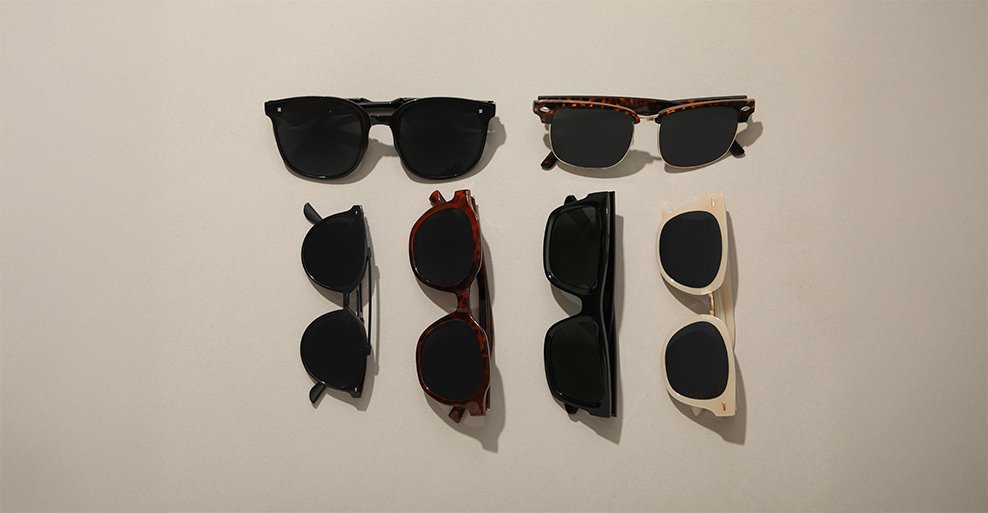
- Style Range: Aviators, wayfarers, wraps, oversized frames—there’s something for every face shape and taste.
- Lens Appearance: Pick gray, brown, or green tints, or even mirror coatings. These change brightness and color contrast, but your prescription stays the same.
Dedicated for Outdoor Use Only
Prescription sunglasses really shine outside, but the tint never changes.
- Permanent Tint: Lenses don’t lighten indoors, so everything looks dim inside. You’ll need to take them off when you go in.
- Pair Switching: Most people keep a second pair of clear glasses, which means swapping as you move between places.
- Use Limits: Not great for offices, stores, or night driving. They’re a single-purpose tool for sunny settings.
Who It's For
Prescription sunglasses work for people wanting steady sun protection and clear vision outdoors.
- Frequent Drivers: If you drive a lot, polarized lenses cut road glare and make long trips easier on your eyes.
- Outdoor Workers: If you’re outside for work, fixed tint and UV protection help all day long.
- Style-Focused Users: Want bold frames just for sunny days? Separate sunglasses let you go wild with color and shape, without affecting your daily pair.
Clip-On Sunglasses: Versatile And Easy To Use
Clip-on sunglasses snap onto your regular prescription glasses in seconds. They’re affordable, easy to use, and perfect if you want flexibility but don’t need a built-in look.
Easy to Attach and Remove
Definition: Clip-ons attach right to your existing frames, letting you switch between clear and tinted lenses fast.
- Method: Most use a spring clip at the nose bridge or little magnets. These sit at the center, so the lenses line up quickly—no tools needed.
- Speed: You can put them on or take them off in seconds. Sun comes out? Pop them on. Go inside? Off they go.
- Control: Unlike photochromic lenses, clip-ons are instantly dark since the tint is fixed. No waiting for anything to adjust.
- Portability: They’re thin and flat, so you can toss them in a small case or even your pocket. No need to carry a whole extra pair.
Affordable and Practical
Definition: Clip-ons give you sun protection for less since you reuse your own prescription lenses underneath.
- Cost structure: You’re just paying for the tinted lenses and attachment, not a custom prescription grind. That’s usually the pricey part of glasses.
- Price range: Clip-ons typically cost way less than prescription sunglasses. You get sun protection without a big investment.
- Use cases: They’re handy for driving, quick walks, or travel when the light keeps changing.
- Optical features: Many include polarized lenses and full UV protection. Polarization helps with glare from roads and water, making daytime driving easier on your eyes.
Slightly Heavier and Less Seamless
Definition: Clip-ons add a second lens layer, which changes the feel and look a bit.
- Weight: The extra lens sits on top, so you might feel a little more pressure on your nose if you wear them for hours.
- Fit: Clip-ons come in standard shapes and sizes, so sometimes you’ll see small gaps or overhangs if the fit isn’t perfect.
- Alignment: If the size isn’t matched well, they can block your side vision or touch your cheeks. The curve might not line up with your base lens.
- Appearance: The double-layer look is more obvious than built-in sunglasses. If you like a clean frame profile, this might bug you.
Who It's For
Definition: Clip-ons are for people who want flexibility and to save money instead of buying a second pair.
- Budget focus: Perfect if you want sun protection on a budget.
- Occasional use: If you’re not outside much, clip-ons can stay off most of the day.
- Existing eyewear: They’re great if you already love your current frames and lenses.
- Situational needs: Drivers, travelers, and commuters get quick light-change coverage without swapping glasses.
Photochromic Glasses: Adaptive And Lightweight
Photochromic glasses change tint with the light, so you don’t need to juggle two pairs. They stay sleek and lightweight, and they’re best for people who move in and out of buildings all day.
Light-Responsive Lenses
Definition: Photochromic lenses adjust their tint when exposed to UV—darker outside, clear inside.
- Trigger: UV light activates dyes in the lens, so they darken outdoors and clear up indoors.
- Speed: Most modern lenses shift in about 30 to 60 seconds. That means you don’t need to swap glasses for quick trips outside.
- Protection: Many block UVA and UVB up to 400 nm (UV400), so you get eye protection without extra layers.
- Limit: Car windshields block UV, so lenses might stay lighter while driving—unless you get a version that reacts to visible light too.
One Pair for All-Day Wear
Photochromic glasses mean you don’t have to carry two pairs. The lens adapts as the light changes during your day.
Since your prescription stays in one frame, you skip the alignment headaches that come with swapping glasses. This is especially nice for progressives, where lens position matters.
You save time and lower the risk of losing a second pair. Plus, there’s less to store at work or in your bag.
Common uses:
- Commuting between office and outdoors
- Short walks and lunch breaks
- Travel when you want to pack light
Sleek, Integrated Look
Photochromic lenses look like regular clear lenses when you’re inside. There are no clips, hinges, or overlays to mess with.
The tint is inside the lens material, so your frames keep their original shape and weight. You won’t feel extra pressure on your nose or ears.
Frames come in acetate, stainless steel, and lightweight plastic. Lens options cover single vision and progressive designs.
Compared to clip-ons:
- No visible attachment points
- No color mismatch between lens and clip
- No added thickness at the front
Who It's For
Photochromic glasses are great for people who go in and out of buildings a lot—think office workers, students, or parents on the move.
They’re also good if you want to keep things simple. One frame does it all—vision correction and sun protection.
If you have a strong prescription, you’ll probably like not needing a second custom sunglass lens. It just makes things easier, honestly.
They’re best for short outdoor stints, not a whole day at the beach or on the field.
Considerations Before Buying
Photochromic lenses usually cost more than regular clear ones. That’s because of the extra treatments and manufacturing steps.
Tint strength changes by brand and type. Some only get to a medium-dark gray or brown, which might feel lighter than real sunglasses.
Temperature can mess with performance. In cold weather, they’ll darken more; in hot weather, sometimes not as much.
Over the years, the tint response can fade. If you’re in the sun every day, you might notice slower transitions after a few years.
Quick takeaways on photochromic lenses:
- Driving: Car windshields reduce UV, so lenses may not darken much behind the wheel.
- Sports: Not ideal for long, bright outdoor exposure—they don’t get as dark as dedicated sunglasses.
- Longevity: Tint response can fade as lenses age.
Conclusion
Choosing between prescription sunglasses, clip-ons, and photochromic glasses really depends on your daily habits and where you use your eyewear.
Prescription Sunglasses: These give you a fixed tint and UV400 protection, blocking 100% of UVA and UVB rays. The dark tint cuts glare in bright sun, so you get clear outdoor vision, but you do have to switch glasses when you head indoors.
Clip-Ons: Clip-ons attach to your regular frames with magnets or clips. They add sun protection without making you buy a whole new pair of prescription glasses. They're cheaper upfront, but you do have to deal with the extra weight and remember to carry them around.
Photochromic Glasses: These lenses have light-reactive compounds that change tint when exposed to UV light. Indoors, they stay clear. Outside, they darken. So, you can use one pair as you move between spaces all day.
If you drive a lot or spend hours outside, dedicated sunglasses might make more sense. But if you want flexibility and don't love switching glasses, photochromic lenses are a solid pick.
Photochromic glasses stand out as a pretty balanced, all-in-one choice. You get clarity, UV protection, and daily comfort without much hassle.
Lenses react to UV, darkening outside and clearing up indoors. This helps with eye strain when you move between different lighting. One pair replaces two. That means less to keep track of and easier storage. At GlassesShop, you can browse lightweight photochromic options for indoor and outdoor use. The Face Shape Detector tool helps you find frames that suit your face. Their Buy One Get One Free deal makes upgrading more affordable. You get a 365-day warranty and free shipping on orders over $69 for extra peace of mind.
FAQs
What are the benefits of prescription sunglasses over clip-ons?
Prescription sunglasses give you built-in sun protection and a single, dedicated eyewear setup.
- Lens integration: The tinted lenses and your vision correction are all in one. Since the tint is inside the lens, you don't get those annoying glare gaps that clip-ons sometimes leave at the edges.
- UV protection: Most prescription sunglasses block 100% of UVA and UVB light. You get consistent protection, and you don't have to worry about whether your clip-on is sitting right.
- Fit and stability: The frames hold the lenses steady, just like regular glasses. This helps prevent slipping or misalignment when you're walking or driving.
- Optical clarity: The prescription matches exactly, with no extra layer. That means less distortion compared to clip-ons that might not line up perfectly.
How do transition lenses compare to clip-ons in terms of convenience and cost?
Transition lenses adjust to the light automatically, while clip-ons are cheaper up front.
- Convenience: Photochromic lenses darken when they're exposed to UV and clear up inside. They do their thing on their own, so you don't have to attach or remove anything.
- Response limits: These lenses need UV to react. So, in a car, where the windshield blocks a lot of UV, they might not get as dark as you'd like.
- Cost: Photochromic lenses usually add about $100–$400 to your prescription glasses. Clip-ons are much cheaper since you just use your current frames.
- Daily use: Clip-ons need you to handle and store them. You'll have to remember to bring them and keep them clean.
What factors should one consider when deciding between prescription sunglasses and photochromic lenses?
Honestly, it comes down to where and how often you need sun protection. Some people spend most of their time outside, while others bounce between indoors and outdoors all day.
If you’re mostly outdoors—say, driving a lot or playing sports—prescription sunglasses make sense. They’re made for those long stretches in the sun, and they don’t mess around with tint changes.
Photochromic lenses, on the other hand, fit better if your days are a mix of inside and outside. They shift tint depending on the light, so you’re not constantly swapping glasses.
With sunglasses, you’ll need a totally separate pair. That’s another thing to carry, and honestly, another thing to lose.
Photochromic lenses save you the hassle of switching between pairs. You just wear them, and they adapt as you move through your day.
Price matters too. Prescription sunglasses usually run from $150 to $500, depending on the frames and lens features you pick.
If you already have a pair of glasses you like, adding photochromic lenses could be a bit cheaper than buying a whole new set of prescription sunglasses.